Germany's Political Crisis: Far-Right Gains Raise Alarm as Chancellor Faces Backlash
Chancellor Friedrich Merz vows to remain in power despite electoral losses, as the far-right Alternative für Deutschland surges in popularity, raising concerns about the future of democracy.
Germany's Political Crisis: Far-Right Gains Raise Alarm as Chancellor Faces Backlash
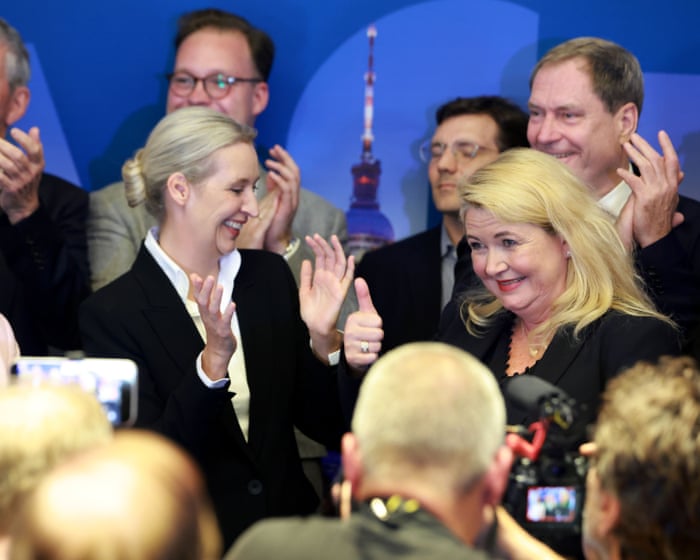
The political landscape in Germany is undergoing a tumultuous shift as Chancellor Friedrich Merz faces mounting pressure after his party suffered significant defeats in two state elections. The far-right Alternative für Deutschland (AfD) party has capitalized on this instability, securing an alarming 38% of the vote in Mecklenburg-Western Pomerania, a clear indicator of their growing influence. Meanwhile, the leftist Die Linke party claimed victory in Berlin, further complicating Merz's position.
In the wake of these results, questions arise about government accountability and the implications for German democracy. What does this mean for social cohesion and the rights of marginalized communities, particularly as the AfD espouses anti-immigration sentiments? As Merz pledges to implement political changes, concerns are growing about the future of his leadership and the potential for further far-right gains.
As reported by The Guardian, speculation is intensifying regarding whether Merz will be able to hold onto his position amidst calls for change within his party. Citizens are left wondering: how will the government respond to these electoral shocks, and what measures will be taken to counter the rise of extremist ideologies that threaten social justice and equality?
The political turmoil raises urgent questions for Europe about the resilience of democratic values and the need for accountability in addressing the concerns of ordinary citizens affected by these shifts.
Source: The Guardian