UK Mathematician Exposes Misconception About the Parthenon's Design
A recent study challenges the long-held belief that the Parthenon's curves were a fix for optical illusions, sparking a debate about architectural misconceptions.
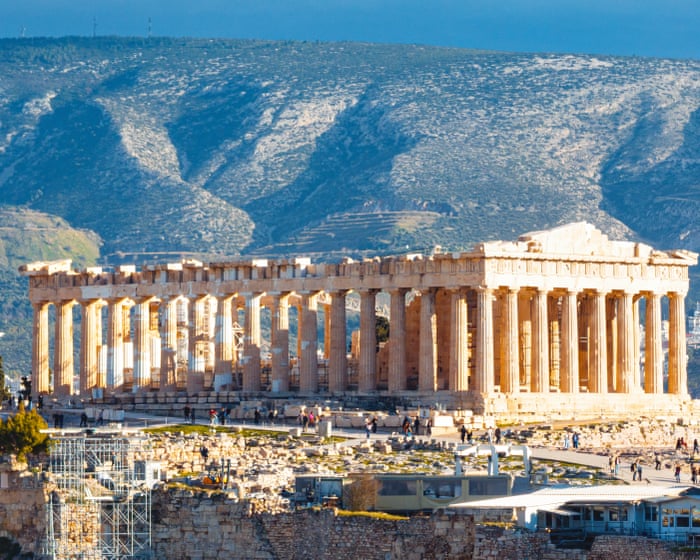
UK Mathematician Exposes Misconception About the Parthenon's Design
Unraveling a Historical Myth
A UK mathematician has taken on one of history's oldest architectural myths by challenging the belief that the Parthenon's curves were designed to counteract optical illusions. For over 2,000 years, the temple, which majestically overlooks Athens, has been celebrated for its architectural brilliance and geometric precision.
In his study, the mathematician argues that the subtle curves of the Parthenon were not intended to correct visual distortions but rather reflect a different design philosophy. This revelation invites us to reconsider what we think we know about this iconic structure, long revered by scholars and architects alike. Are we prepared to question other assumptions about our architectural heritage?
The implications of this finding reach beyond just the Parthenon; they challenge the way we interpret historical architecture and its intended effects. As reported by The Guardian, this new perspective may lead to a broader re-evaluation of how we understand the intersection of art and science in ancient constructions.
Source: The Guardian